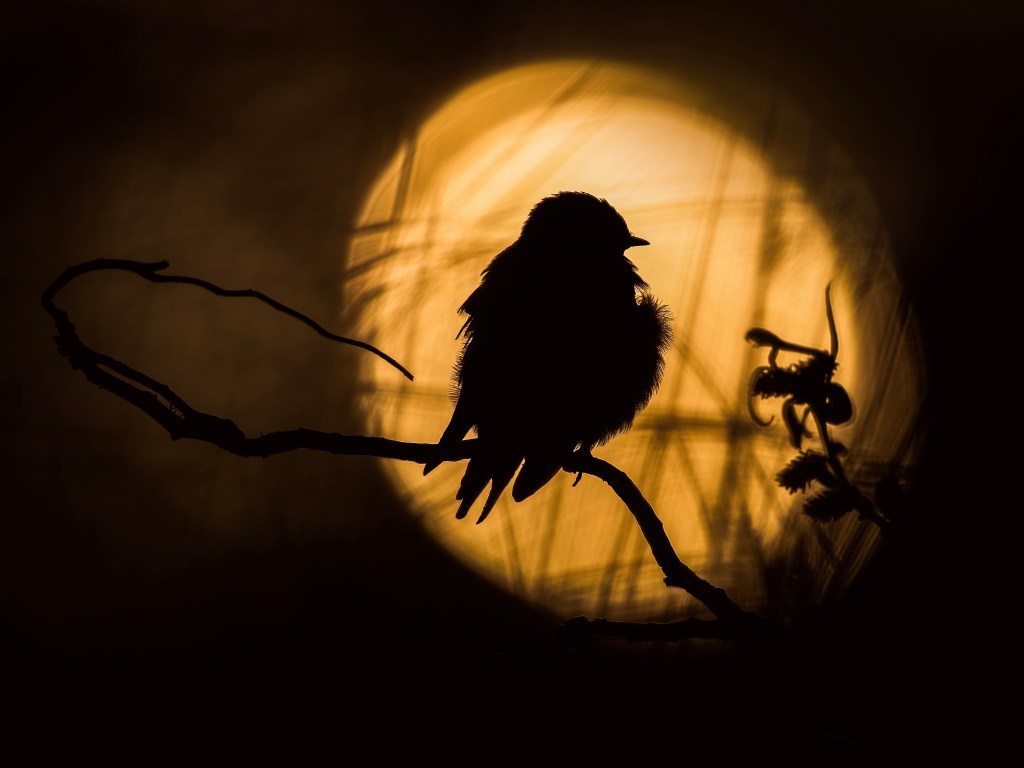
Wildlife photography audiences seem to reward images of rare species more than common ones – rare birds get the biggest wows, the most social media likes and shares, and the lion’s share of the accolades. That’s probably because those measurements of success are all earned, for the most part, by showing people things they haven’t seen before. Most of us see sparrows every day. Hardly anyone has seen a kiwi in the wild.
But given a choice between an ordinary photograph of something rare, and an extraordinary photograph of something ordinary – I will prefer the latter every time. And this philosophy is reflected in my work.
I really don’t care what species of bird I have in front of my lens. I only care about making art out of whatever nature gives me. In fact, the more common the bird the better as far as I’m concerned because I relish the chance to try and show people beauty and character they haven’t seen before in wildlife they see every day.
Why? Because I love the challenge, but also because it’s important. Someone who sees my work and falls in love with swallows or ducks or pūkekos might keep their cat inside. Or someone who sees my work and falls in love with gulls or terns or dotterels might keep their dog on a leash at the beach. People are more likely to protect what they’ve learned to appreciate. And the wildlife they encounter every day is the wildlife they have the most immediate opportunities to protect.
There are creative perks too. Common birds are, well, common. You have them in your backyard and they are abundant in most suburban green spaces. You can take all the hours you would have spent finding something rare and elusive before you even get to point a camera at it, and use them all to learn behaviour, study light and find angles and ways to artfully capture things that are quick and easy to find and predict.
Does that ease and democracy of access make the pictures you take any less valuable? Not in my book.
Photography shouldn’t be judged on how hard it was to find the subject. It should be about the creativity and beauty of the final image and the story it is telling. In my mind, the true value of a great photograph is in the impact it has on the viewer, the emotions it evokes and the minds it changes. I see no reason why photographs of common subjects can’t have the greatest impact.